Solar Flares and Geomagnetic Storms: Cosmic Influences on Earth
Our Sun may look calm and steady from Earth, but in reality it’s a dynamic, fiery star with moods of its own. Sometimes those moods explode — literally. These explosions are known as solar flares, and when they reach Earth, things can get interesting.
[ad] Empty ad slot (#1)!
What Are Solar Flares?
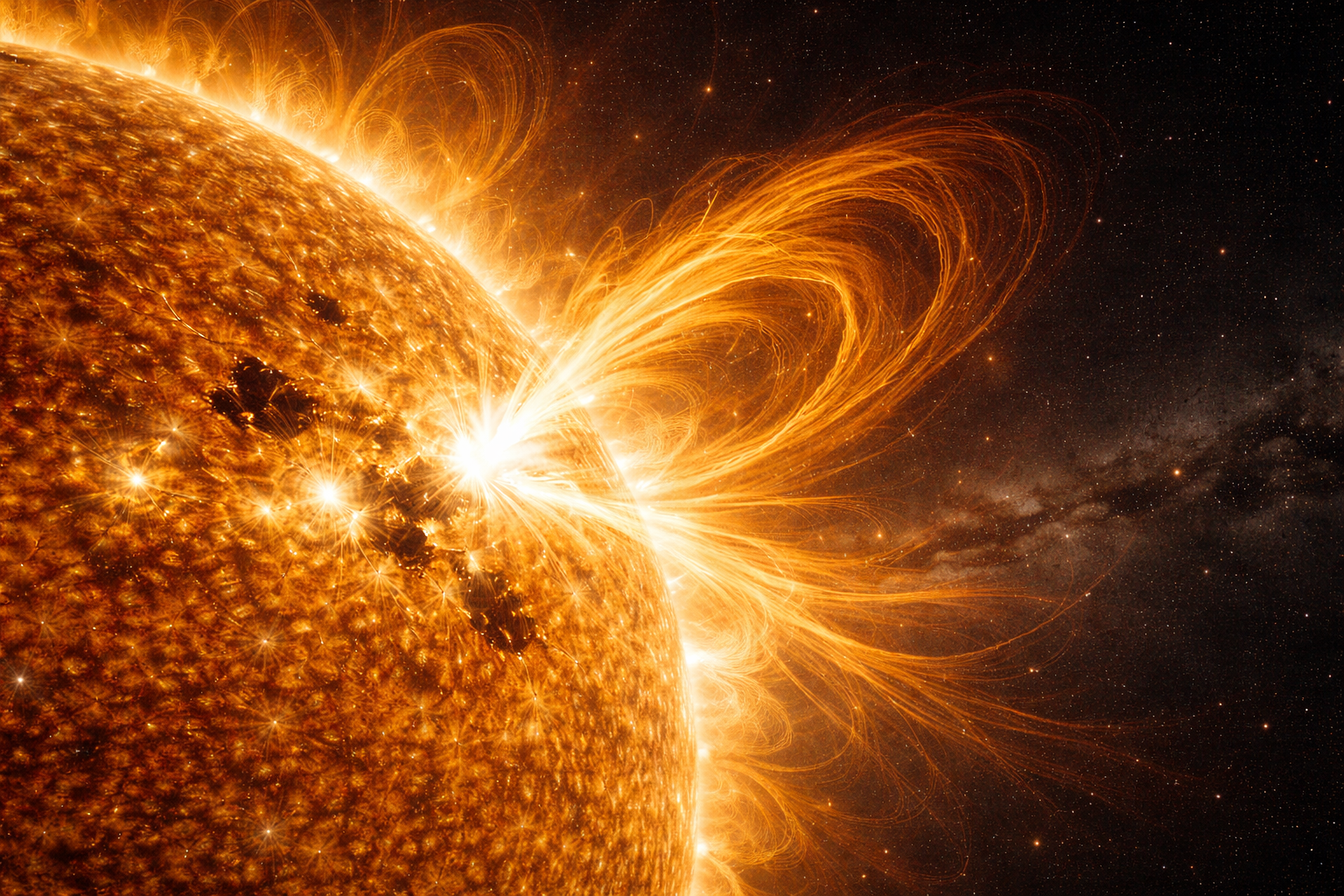
Solar flares are sudden, intense bursts of energy released from the Sun’s surface. They occur when magnetic energy built up in the Sun’s atmosphere is suddenly released, sending out powerful radiation and streams of charged particles into space.
These particles travel at incredible speeds. If Earth happens to be in their path, they collide with our planet’s magnetic field — and that’s when we experience a geomagnetic storm.
 What Happens During a Geomagnetic Storm?
Earth is protected by its magnetic field, which acts like a cosmic shield. When solar particles slam into it, the field becomes temporarily disturbed. This disturbance is what scientists call a geomagnetic storm.
On the practical level, strong geomagnetic storms can:
- disrupt radio communications and satellite signals,
- affect GPS navigation systems,
- interfere with aviation routes, especially near the poles,
- cause voltage fluctuations in power grids.
On the beautiful side of things, these storms are also responsible for one of nature’s most stunning displays — auroras. The Northern and Southern Lights appear when charged particles interact with Earth’s atmosphere, lighting up the sky in waves of green, purple, and red.
How Do Geomagnetic Storms Affect the Human Body?
While science doesn’t label geomagnetic storms as dangerous to healthy individuals, many people report noticeable changes during periods of strong solar activity.
Commonly reported sensations include:
- fatigue or unusual tiredness,
- headaches or pressure sensations,
- difficulty concentrating,
- heightened anxiety or emotional sensitivity,
- sleep disturbances.
Researchers suggest this may be linked to subtle changes in Earth’s magnetic environment, which can influence the nervous system, blood circulation, and biological rhythms — especially in sensitive individuals.
Astrology’s Take on Solar Activity
Astrology has long associated the Sun with vitality, identity, and collective life force. When solar activity intensifies, astrologers often observe periods of heightened emotional charge, increased reactivity, and global tension.
Historically, strong solar cycles have coincided with moments of social unrest, technological leaps, and shifts in collective consciousness. This doesn’t mean solar flares “cause” events — but they may act as energetic amplifiers, intensifying what is already present.
In astrological language, solar storms are moments when the Sun reminds us who’s really in charge of the rhythm here.
How to Navigate Strong Solar Activity
You don’t need to hide underground during a geomagnetic storm — but a little awareness goes a long way.
- Slow down if you feel overwhelmed or drained.
- Stay hydrated and rest more than usual.
- Limit information overload and screen time.
- Ground yourself — nature, walking, and quiet time help.
Think of geomagnetic storms as cosmic weather. You don’t argue with a thunderstorm — you adjust your plans.
Final Cosmic Note
Solar flares and geomagnetic storms are reminders that Earth is not isolated. We live inside a living, breathing cosmic system, constantly influenced by forces far beyond our atmosphere.
Sometimes those forces knock out satellites. Sometimes they paint the sky with light. And sometimes they simply remind us to slow down, listen, and remember that we are — quite literally — solar-powered beings.
🌌 How Each Zodiac Sign Reacts to Geomagnetic Storms
[ad] Empty ad slot (#1)!